The advice didn't fit.
Most ADHD and autism support material is written by people who don't live with it. The support that worked was practical, low-key, and built around the specific person.

About
Christchurch. Founder of Neuro Support, and the one who delivers it. Fifteen years in disability support. A neurodivergent brain that doesn't reliably hold everything on demand, even on the good days. Neuro Support is built from that overlap.
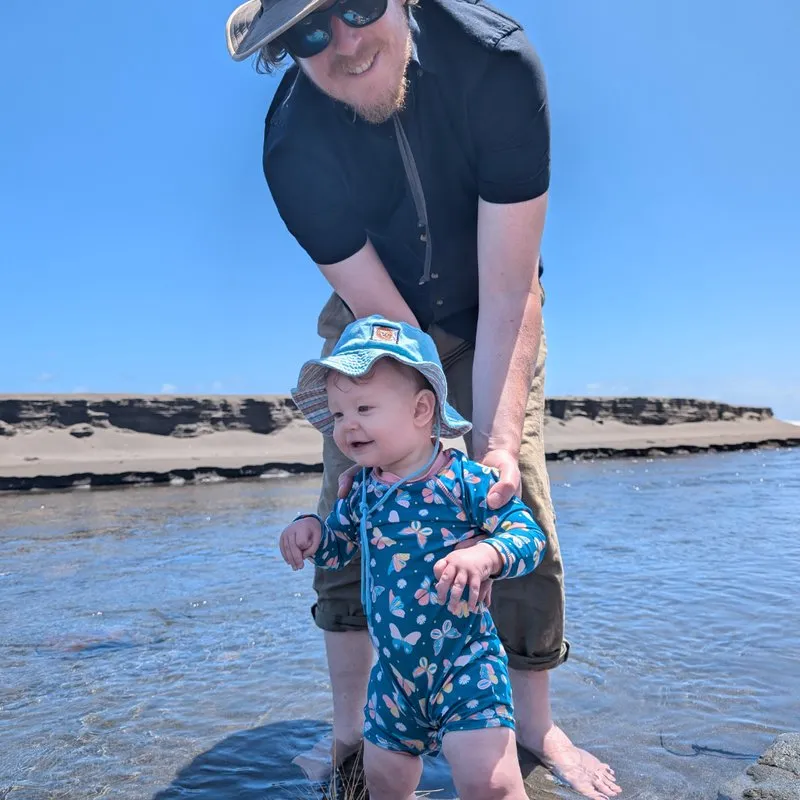
Husband. Father. Skin in the game.
The work history
Jamie has worked in disability support since 2011. Community, behavioural, in-home. Adults with intellectual disability, ADHD, autism, traumatic brain injury, and combinations of all of it. A BA in Human Services with a Psychology minor sits underneath the practice.
A lot of support models try to optimise from above: better systems, better incentives, better KPIs. The work itself happens at ground level. In someone's flat, on someone's phone, between two people, at the moment something needs doing. Neuro Support starts there.
Why this design exists
Jamie is neurodivergent. ADHD, diagnosed.
Some design decisions come from the literature. Most come from the inside: years of building, breaking, and rebuilding systems for his own brain, and watching clients do the same with theirs.
ADHD and autism are not problems of intelligence or motivation. They are problems of holding. Working memory. Time awareness. Initiation. Prioritisation. The tax of constant micro-decisions. The way a single open question crowds out all the others until something fails.
If you can't reliably hold the system, the system has to hold more.
That's the design spec.
The motivation
A few things kept showing up.
Most ADHD and autism support material is written by people who don't live with it. The support that worked was practical, low-key, and built around the specific person.
Productivity apps, planners, "ADHD-friendly" templates. They worked on good days and collapsed on bad ones. Most still assumed you could remember to use them.
ADHD coaching helps. It also costs NZ$200 to $250 a session and ends when the sessions end. The benefit does not transfer to the days you are not in one.
Notion as a workspace. Claude as a Support Agent. A phone you already carry as the capture surface. The pieces existed. They just had not been combined into a complete service for the people who needed it most.
Neuro Support is what happens when those four observations meet a founder willing to install systems instead of only talking about them.
The bet
The whole service runs on this idea. The system is set up so the right next step is in front of you when you need it. So a thought you have at 11pm is not lost by 9am. So the version of you that is exhausted, dysregulated, or just having a bad week can still function.
You don't have to earn it. You don't have to perform for it. It just has to be there.
The work
The work is practical. Reduce the load. Build usable scaffolding. Keep the system aligned with the person using it.
Good support builds independence. The point is not to keep clients dependent on Jamie or on the ongoing service. The agent learns you. You learn the agent. The system stays as long as it is helping. You leave when you are ready.
The system works with the people who help, not instead of them. Jamie is a support worker. Neuro Support is not built to take that role from anyone. It holds the part a person should not have to: the appointments, the reminders, the running list of everything not to forget. And when you want them there, the people in your corner can be part of the system too. A partner, a parent, a support worker, each with access you set and control. You own it, and Home stays private. When the system carries the load, the people in your life get their time back for the things only people can do. The conversation. The judgement. Showing up. The agent is your memory, so nobody else has to be.
I aim to work myself out of a job.
Scope of practice
Jamie is a support worker and system installer.
Jamie is not:
Neuro Support helps with practical disability support, executive-function scaffolding, and day-to-day structure. It does not replace medical care, mental health care, legal advice, financial advice, or crisis response.
If you need clinical support, talk to your GP, NASC, or a registered clinician. If you need crisis support, call or text 1737 (free, 24/7) or Lifeline on 0800 543 354. If something is urgent or unsafe, contact emergency services directly.
Where Neuro Support is based
Jamie is based in Christchurch. Most clients are New Zealand-based. Installs are usually done online, with in-person available for Christchurch clients on request.
The service is set up for the practical realities of disability support in Aotearoa, including Individualised Funding, NASC arrangements, and host providers like Manawanui. Outside Aotearoa? Get in touch. The install runs over a video call wherever you are.
One next step
The Discovery Call is a short first conversation. Ask questions, check fit, decide whether there's a useful next step. No pressure, no commitment.